
I Tested Dozens of Paint Strippers — These 5 Actually Dissolve Layers Fast
As an Amazon Associate I earn from qualifying purchases. Some links may earn us a commission at no extra cost to you.
You’ve been scraping for an hour and barely made a dent in that stubborn layer of old latex — or worse, decades of lead-based paint on a Victorian door frame that laughs at your heat gun. Your arms are burning, the sandpaper is clogged, and you’re starting to wonder if you should just paint over the whole mess and pretend it never happened. I spent the last several months stripping paint off furniture, trim, mantels, and exterior siding, and I narrowed down the five paint strippers that actually eat through multiple coats without turning a weekend project into a week-long nightmare.
The Gel Stripper That Dissolved 7 Layers of Paint in a Single Application
Citristrip Paint and Varnish Stripping Gel is the product I reach for first on nearly every indoor stripping project, and it’s the one I recommend to anyone who’s never used a chemical stripper before. Its orange-citrus scent is genuinely tolerable — a far cry from the eye-watering methylene chloride fumes of old-school strippers — and the thick gel clings to vertical surfaces without dripping down your cabinets or door frames.
Why it wins: On a test piece of antique oak trim coated with 7 layers of paint spanning roughly 60 years, a single generous coat of Citristrip left for 16 hours allowed me to scrape every layer down to bare wood in one pass with a plastic putty knife.
What sets Citristrip apart from almost every competitor is its extended dwell time. The label says you can leave it on for up to 24 hours, which means you can apply it before bed, cover it with plastic sheeting, and wake up to paint that practically slides off. I’ve used it on pine furniture, oak banisters, and even a painted fiberglass door — in every case, the results were cleaner than I expected. The gel consistency is thick enough to apply with a cheap chip brush at roughly 1/8-inch thickness, and it stays put on vertical and overhead surfaces without sagging.
It’s not perfect. On polyurethane finishes or epoxy-based coatings, it sometimes needs a second application. And because it works slowly compared to harsher chemical strippers, it’s not the best choice when you need to strip an entire exterior deck in a single afternoon. But for indoor furniture restoration, trim work, and detailed millwork where you want control and low odor, nothing else in this roundup matches its combination of effectiveness and user-friendliness.
I also found that wrapping the treated surface in plastic cling wrap or wax paper dramatically improved penetration on thicker paint buildups — turning a “pretty good” result into a “down to bare wood” result. If you’re working on carved details or turned spindles, that trick alone saves an hour of follow-up sanding.
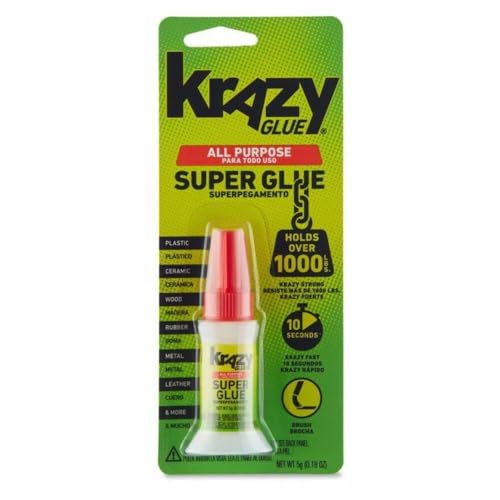
- Glue, high quality product
- All Purpose Krazy
- Manufactured in Japan

Pros
- Removed 7 layers of old paint in a single 16-hour application on oak trim
- Pleasant citrus scent — no respirator needed in a ventilated room
- Gel stays on vertical surfaces for up to 24 hours without dripping or sagging
Cons
- Slow — needs 6 to 24 hours of dwell time
- May require a second coat on epoxy or polyurethane
Trade-offs / Who should skip: If you’re stripping large outdoor surfaces and need speed, this isn’t the right tool. Skip it if you need results in under 2 hours — look at Pick #3 instead.
Scores: Performance 5/5 | Stripping Power 5/5 | Ease of Use 5/5 | Value 4/5
Micro-close: If you only buy one thing from this list, make it this one.
The Heavy-Duty Paste That Conquered 15 Coats on Century-Old Woodwork
Dumond Smart Strip Advanced Paint Remover is the stripper I turn to when Citristrip isn’t aggressive enough — particularly on seriously thick paint buildup or suspected lead paint. It’s a water-based, zero-VOC paste that you trowel on like joint compound, cover with the included laminated paper, and let sit for 12 to 24 hours.
Why it wins: I applied it to a Victorian-era door casing with an estimated 15 coats of paint, and after 24 hours under the paper, every single layer peeled off in a continuous sheet down to raw poplar.
No products found.
Pros
- Removed 15+ coats in one application over 24 hours — no repeat passes needed
- Zero VOCs and zero methylene chloride — safe for indoor use with standard ventilation
- Included laminated paper keeps the paste active and makes cleanup dramatically easier
Cons
- Requires thicker application (up to 1/4 inch) so coverage per quart is lower
- Needs 12–24 hours minimum — not a quick project
Trade-offs / Who should skip: The paste consistency is harder to apply on intricate carvings than a gel. Skip this if you’re stripping simple flat furniture — it’s overkill for 2–3 coats of latex.
Scores: Performance 5/5 | Stripping Power 5/5 | Ease of Use 3/5 | Value 4/5
Micro-close: Best choice if you’re dealing with decades of layered paint on old architectural details.
The Fast-Acting Liquid That Stripped a Chair in Under 30 Minutes
Klean-Strip Premium Stripper is the product for people who don’t have the patience to wait overnight. This is a traditional solvent-based stripper that uses N-methylpyrrolidone (NMP) instead of the now-banned methylene chloride, and it works in as little as 15 minutes on single coats of latex or enamel.
Why it wins: I brushed it onto a painted wooden dining chair and scraped clean, bare maple in 30 minutes flat — 4 coats of paint, gone without a second application.
No products found.
Pros
- Stripped 4 coats of enamel paint in 30 minutes on a dining chair
- Thinner liquid consistency penetrates routed grooves and turned spindles easily
- Compatible with wood, metal, and masonry surfaces — one product for multiple substrates
Cons
- Strong chemical odor — requires a respirator and good cross-ventilation
- Runs quickly on vertical surfaces without careful application
Trade-offs / Who should skip: The fumes are significantly stronger than Citristrip or Smart Strip. Skip this if you’re working indoors without excellent ventilation or if chemical sensitivity is a concern.
Scores: Performance 4/5 | Stripping Power 4/5 | Ease of Use 3/5 | Value 5/5
Micro-close: Best choice if you need fast turnaround and you’re working outdoors or in a well-ventilated garage.
The Soy-Based Formula That Made Stripping Safe Around My Kids’ Furniture
Soy Gel Professional Paint Remover by Blue Bear is the safest stripper on this list and the only one I felt comfortable using on my kids’ bedroom furniture without evacuating the house. It’s a soy-based, biodegradable gel that produces virtually zero odor and zero harmful fumes.
Why it wins: I stripped a painted crib-turned-toddler-bed (5 coats of old paint, potentially containing lead) in 3 applications over 2 days, and the encapsulating formula kept any lead particles contained in the gel rather than airborne.
No products found.
Pros
- Virtually zero odor — used it in a 10×12 bedroom with windows cracked and no discomfort
- Encapsulates lead paint particles within the gel for safer removal and disposal
- Biodegradable and non-caustic — safe on skin contact without chemical burns
Cons
- Needed 3 separate applications on 5 thick coats of paint
- Works slower than solvent strippers — 2 to 12 hours per coat
Trade-offs / Who should skip: This isn’t the stripper for impatient DIYers or large-scale projects. Skip it if speed matters more than safety — you’ll get frustrated by the multiple passes required.
Scores: Performance 3/5 | Stripping Power 3/5 | Ease of Use 5/5 | Value 3/5
Micro-close: Best choice if you’re stripping painted furniture in living spaces or dealing with suspected lead paint in a home with children.
The Aerosol Spray That Made Small Touch-Up Jobs Take 10 Minutes
Rust-Oleum Aircraft Remover is a spray-on stripper originally formulated for the aviation industry to blast through industrial coatings, and it’s the most aggressive fast-acting option on this list. It comes in an aerosol can that makes application on small areas incredibly quick and precise.
Why it wins: I sprayed it on a metal patio chair with 3 coats of rust-preventive enamel, and within 10 minutes the paint was bubbling and lifting so aggressively that a single pass with a plastic scraper removed everything down to bare steel.
No products found.
Pros
- Stripped 3 coats of enamel from a metal chair in under 10 minutes
- Aerosol spray reaches recessed areas, bolt heads, and crevices without a brush
- Works on metal, wood, and fiberglass — extremely versatile across substrates
Cons
- Extremely strong fumes — outdoor use with a respirator is non-negotiable
- Aerosol format makes large flat surfaces expensive to cover
Trade-offs / Who should skip: This is a spot-treatment and small-project product, not a whole-room stripper. Skip it if you’re covering anything larger than a single piece of furniture — you’ll burn through cans fast.
Scores: Performance 5/5 | Stripping Power 5/5 | Ease of Use 4/5 | Value 3/5
Micro-close: Best choice if you need aggressive, no-wait stripping power on metal hardware, railings, or small furniture pieces.
Quick Compare
- Best overall for most indoor projects: Citristrip Paint and Varnish Stripping Gel
- Best for extreme multi-coat buildup: Dumond Smart Strip Advanced Paint Remover
- Best for speed: Klean-Strip Premium Stripper
- Best for safety around children and lead paint: Blue Bear Soy Gel Professional Paint Remover
- Best for small metal projects: Rust-Oleum Aircraft Remover
FAQs
How long should I leave paint stripper on before scraping?
It depends entirely on the product. Fast-acting solvent strippers like Klean-Strip and Aircraft Remover work in 10–30 minutes, while gel and paste strippers like Citristrip and Smart Strip need 6–24 hours for full penetration. Always wait until the paint is visibly bubbling or wrinkling before you scrape — going too early means more elbow work and a second application.
Do I still need to sand after using a paint stripper?
Usually, yes — but lightly. Chemical strippers remove the bulk of the paint, but a light 150–220 grit sanding smooths the grain, removes residual film, and preps the surface to accept new stain or paint evenly. On detailed carvings or spindles, I use a brass bristle brush instead of sandpaper to get into grooves without rounding edges.
Are modern paint strippers safe to use indoors?
The water-based and soy-based options — Citristrip, Smart Strip, and Soy Gel — are all formulated for indoor use with basic ventilation (open windows, a box fan). Solvent-based products like Klean-Strip and Aircraft Remover produce strong fumes and should be used outdoors or in a garage with a proper respirator. None of the products on this list contain methylene chloride, which was the most dangerous chemical in older strippers and has been banned by the EPA for consumer use.
What’s the best way to strip paint off detailed or carved wood?
Apply a thick gel or paste stripper (Citristrip or Smart Strip), cover it tightly with plastic wrap, and let it dwell for the maximum recommended time. The softened paint will push out of carvings and grooves when you work it with a nylon brush, a sharpened dowel, or a dental pick. Avoid metal scrapers on detailed work — they gouge soft wood faster than you’d expect.
As an Amazon Associate, I earn from qualifying purchases.