
Best glue for leather (repairs + leathercraft)
As an Amazon Associate I earn from qualifying purchases. Some links may earn us a commission at no extra cost to you.
Leather is flexible, so the “best” glue is usually the one that stays flexible and matches your job: contact cement for structural seams, water-based cement for lower fumes, and urethane for boot/sole repairs.
Top picks
Barge All-Purpose TF Clear Cement — Best for strongest leather-to-leather bonds
A classic-style cement for leatherwork when you want a strong, flexible bond that holds up to movement.
Why it wins: It’s purpose-built as a flexible cement with a long enough work window to align pieces before pressing.

- Waterproof, will not freeze, extremely flexible
- One coat
- No nails or stitching
Pros
-
Strong, flexible bond for leather assemblies
-
Clear-drying option (nice for visible edges)
-
Published dry/open time helps planning
Cons
-
Contact cement is unforgiving after pressing (test-fit first)
-
Needs good ventilation (standard for many cements)
See reviews on Amazon.
Trade-offs / Who should skip: Skip if you need lots of repositioning or you’re doing delicate embellishments—this is more “commitment” than “craft glue.”
Scores: Performance 5/5 · Work time (open time) 4/5 · Ease of use 3/5 · Value 4/5
Renia Aquilim 315 — Best low-odor, water-based contact cement
If you want a contact-cement style bond but prefer water-based handling, this is a top contender in leather/footwear workflows.
Why it wins: It’s designed as a contact adhesive for leather/rubber work, with an open-time window called out in Renia docs.

- LEATHER CEMENT: One of the strongest water-based leather contact cements on the market!
- ODORLESS: A lot of the alcohol based contact cements have a strong smell that a lot of consumers don't enjoy. With Renia, those troubles are no more! No odors make for a more pleasant experience and no headaches!
- APPLICATION: Don't know if this cement is good for veg tan or oil tanned leather? Renia is a perfect fit for both applications!
Pros
-
Water-based contact adhesive (less solvent-style smell)
-
Documented open time for controlled assembly
-
Intended for leather and related materials in pro workflows
Cons
-
Open time varies by method/conditions (heat activation changes workflow)
-
Not ideal if your shop regularly freezes (can affect water-based adhesives)
See reviews on Amazon.
Trade-offs / Who should skip: If you’re bonding very oily/waxy leather surfaces, prep matters a lot—otherwise the bond can disappoint.
Scores: Performance 4/5 · Work time (open time) 4/5 · Ease of use 4/5 · Value 4/5
GEAR AID Aquaseal SR — Best for boots/soles and high-abrasion repairs
For peeling soles, toe caps, and “this needs to bend and survive abuse,” a urethane repair adhesive is often the right tool.
Why it wins: It’s made for footwear repairs and explicitly bonds to leather/suede and rubber, curing to a flexible, durable rubbery finish.
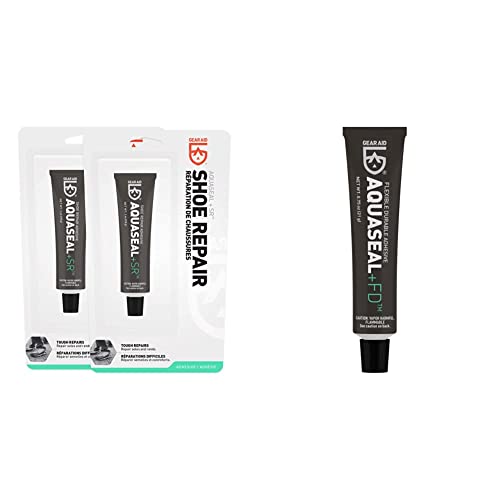
- Product 1: Make long-lasting repairs and seal leaks on hiking boots, running or climbing shoes and even cleats; available in single 1 oz tube or multipacks
- Product 1: Use this durable urethane adhesive (formerly Freesole) that permanently bond to soles and heels; dries as a clear and flexible rubber that won’t peel or crack overtime
- Product 1: Create toe protectors on work boots or re-build worn heels with this shoe glue that is abrasion resistant and waterproof

Pros
-
Designed to stay flexible as footwear bends
-
Bonds to leather/suede and common shoe materials
-
Waterproof + abrasion-resistant repair style
Cons
-
Not the best for flat, invisible seam laminations
-
Cure time is longer than “press-and-go” cements
See reviews on Amazon.
Trade-offs / Who should skip: Skip for fine leathercraft edge laminations (wallet layers, clean seam joins)—it’s more of a repair/build-up adhesive than a crisp assembly cement.
Scores: Performance 4/5 · Work time (open time) 2/5 · Ease of use 3/5 · Value 4/5
Fiebing’s Leathercraft Cement — Best for positioning before stitching
Great when you want to hold pieces in place (patterns, linings, seams) before you sew—more like a “leather-friendly craft cement” than a hardcore shoe cement.
Why it wins: Leather suppliers commonly position it as the “white glue” option versus contact cement for certain steps.

- EASY TO USE: Fiebing's Leathercraft Cement is an easy to use, quick drying leather glue to bond together leather as well as with other materials.
- VERSATILE: Water-based contact adhesive can be used for a variety of DIY crafts and on leather items such as boots, shoes, purses, wallets, jackets, baseball gloves, furniture and more!
- STRONG GLUE: Super high strength, permanent bonding with long lasting results.
Pros
-
Handy for temporary hold/assembly steps before stitching
-
Typically easier cleanup than solvent cements (when fresh)
-
Good for light-duty bonding in mixed-material projects
Cons
-
Not the pick for wet/outdoor or sole-level stress
-
Open time not clearly published (couldn’t verify)
See reviews on Amazon.
Trade-offs / Who should skip: If the item will get soaked or flexed hard (shoe soles, belt laminations under load), choose a contact cement or urethane repair adhesive instead.
Scores: Performance 3/5 · Work time (open time) 3/5 · Ease of use 4/5 · Value 4/5
Eco-Flo Leather Weld — Best budget-friendly, water-based craft adhesive
A solid option for beginners who want a water-based, low-VOC adhesive for leather projects that aren’t brutally demanding.
Why it wins: Straightforward, water-based positioning from Tandy, with common leathercraft use cases.
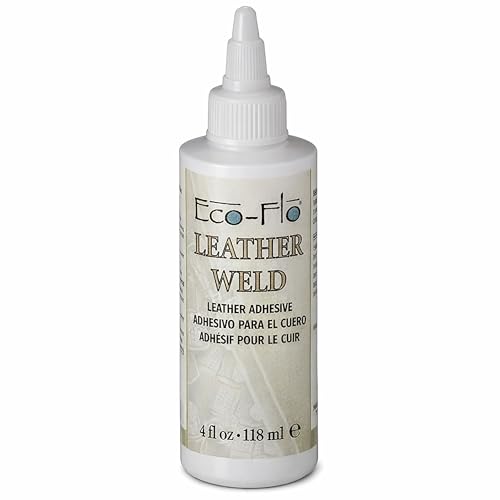
- STRONG AND FLEXIBLE BOND - This advanced water-based adhesive creates a durable yet bendable hold, ideal for wallets, belts, shoes, and repair projects without cracking, peeling, or stiffening over time.
- DRIES CLEAR FOR CLEAN FINISH - The transparent drying formula in this project glue keeps seams, edges, and overlays neat and professional, making it ideal for visible craft projects and precision repairs.
- EASY PRECISION APPLICATION - Smooth spread consistency and a squeeze bottle tip in this leather glue allow accurate control for small leather pieces, intricate DIY crafts, and hobby leatherworking tasks.
Pros
-
Water-based and low VOC by product positioning
-
Easy workflow: apply thin layer and press while wet
-
Good for general leathercraft projects
Cons
-
Not ideal for “this must never peel” footwear repairs
-
Open time not clearly published (couldn’t verify)
See reviews on Amazon.
Trade-offs / Who should skip: If you’re making belts, structured bags, or anything that sees heat/sweat/outdoor abuse, step up to a contact cement (or a shoe repair urethane).
Scores: Performance 3/5 · Work time (open time) 3/5 · Ease of use 5/5 · Value 5/5
Quick compare
-
Strongest leathercraft seam bonds: Barge TF Clear Cement
-
Water-based contact cement (lower fumes): Renia Aquilim 315
-
Boot soles/toe repairs: GEAR AID Aquaseal SR
-
Hold it in place before stitching: Fiebing’s Leathercraft Cement
-
Beginner water-based craft glue: Eco-Flo Leather Weld
FAQs
What glue do cobblers use for leather?
Often contact cements for bonding layers and urethane repair adhesives for high-wear sole areas—because both stay flexible and hold up to movement.
Is super glue good for leather?
Usually not for main seams: it can cure rigid and crack as leather flexes. It’s better for tiny, non-flexing fixes, not structural leatherwork.
Which is best for a torn leather bag seam?
If it’s a structural seam, a contact cement (Barge or Renia) is typically the better match than a basic craft glue—then stitch if the seam takes load.
Which is best for a peeling boot sole?
A shoe/boot repair urethane (Aquaseal SR) is made for that kind of flex + abrasion + water exposure.
As an Amazon Associate, I earn from qualifying purchases.